
Go to documentation repository


Page History
...
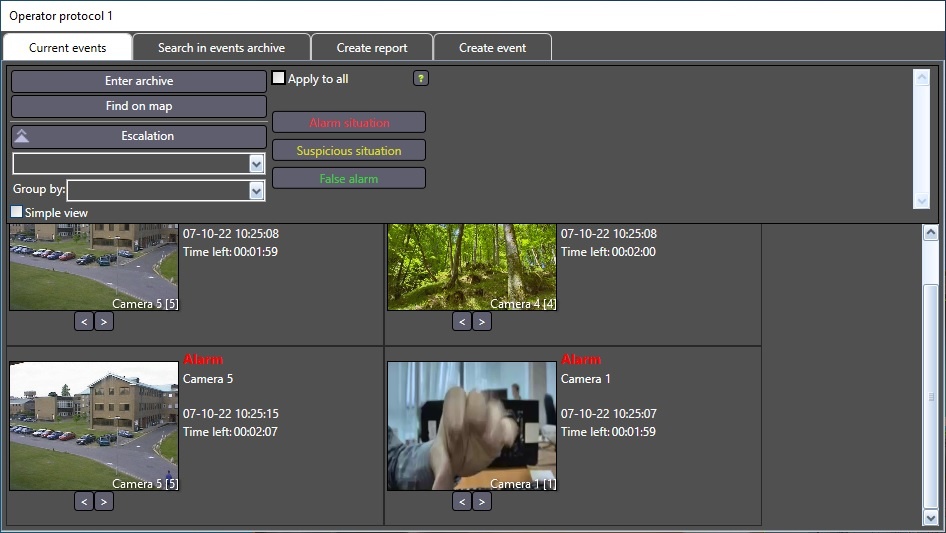
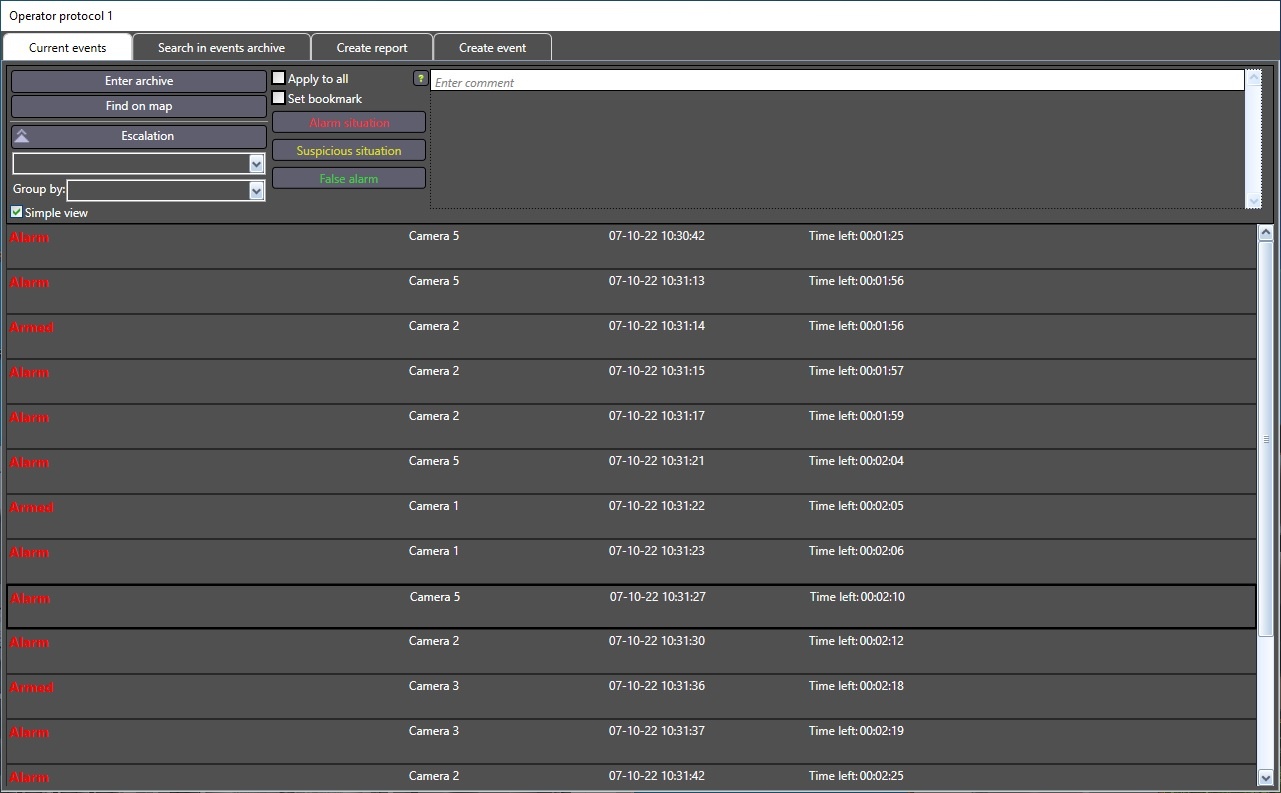
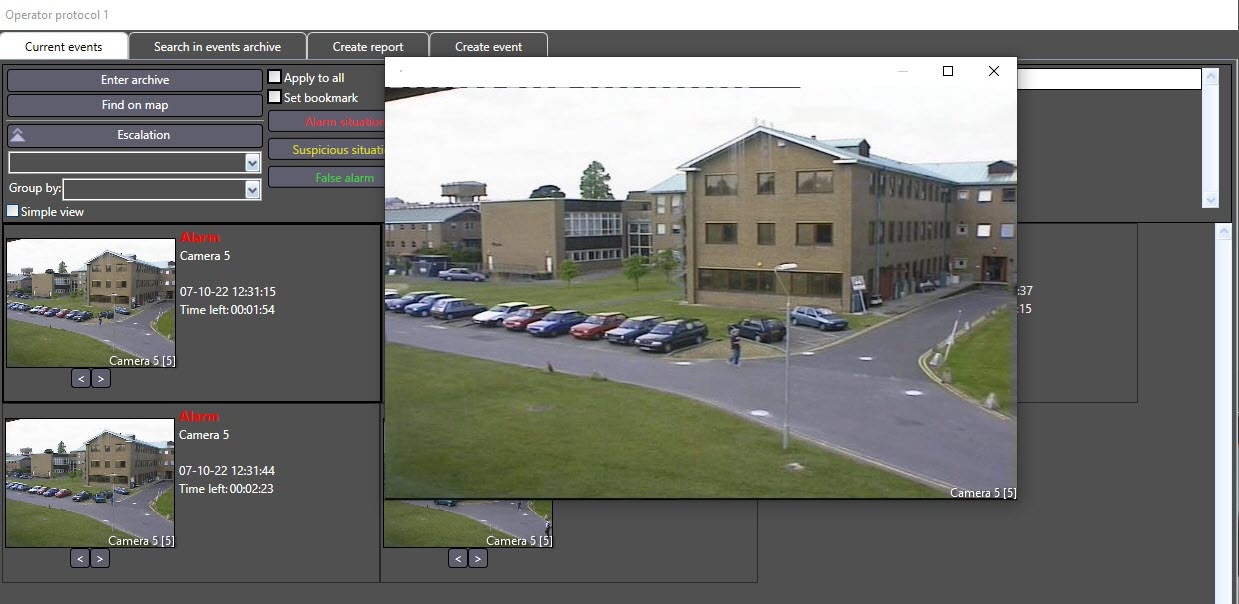
Events are processed in the Current events tab tab of the Operator operator protocol window. The examples The examples of the tab display:
| Note | ||
|---|---|---|
| ||
Buttons are active only when you interact with the selected event. If you click in any other place, they become inactive. |
Current events
Events registered by alarm objects with no type assigned and events escalated from a lower level are displayed in the Current events tab. The event control panel is at the top of the tab, and the information on events is at the bottom of the tab.
The details of the event display:
- Depending on the Operator operator protocol configuration, current events can be displayed as cells with screenshots images or lines without schreenshots images (see Configuring the interface of the Operator protocol interface). The number of horizontal cells is determined by the width of the Operator operator protocol window width. However, the Operator Protocol operator protocol can be configured in such a way that the cell size fits the size of the free area under the event control panel. In this case only one cell is horizontal, and its height is equal to the height of the free area. To display events as lines, set the
 checkbox , if this option is enabled in the settings for the Operatoroperator.
 - Depending on the Operator operator protocol configuration, the events are displayed in the order they are received or by the priority and importance, ascending or descending. When there is ascending sorting - , the newest (of higher priority) event is in the upper left corner or on the top line, when when there is descending sorting - , it is in the bottom right corner or on the bottom line.
- If one or several events are selected by the Operatoroperator, then their position in the Operator protocol is not changed operator protocol window isn't changed, and new events continue appearing in the window - they . They shift in accordance with the sorting order. In this case, the Operator operator protocol can be configured in such a way that when a new event is received, its cell or line automatically becomes active.
- The screenshot of the event is displayed in the cells of the events of the Camera objects as well as the events of objects linked to cameras (see Connection of objects with cameras). If there are several cameras linked to the object, you can use the
 buttons to browse the screenshots. The name of the corresponding camera is displayed on the frame.
Info title Note Event cells can display not only video screenshots but also images received from devices connected to the camera. For this, the operator protocol must receive an event with the imageBase64 parameter, containing a base64-encoded image that must be displayed. Such events can be generated, for example, using a script.
- Events can be displayed without grouping or can be grouped by object, event, or region. Event Events can be grouped using the
 drop drop-down list , if this option is enabled in the settings for the Operatoroperator.
| Info | ||
|---|---|---|
| ||
Temporary images (event screenshots) are stored in the C:\Users\<User name>\AppData\Local\Temp\OperatorProtocol folder. They are automatically deleted at normal Axxon PSIM shutdown or restart. |
Checklist
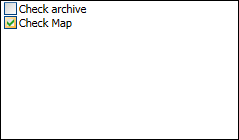
On the right, there is a checklist of actions that should must be performed during the event processing. This list is set up by the Administrator administrator during the Operator Protocol operator protocol configuration. After you perform the required action, set the checkbox next to it, and the information about the task completion will be added to the comment field along with the date and time indication.
Assigning a type to the event
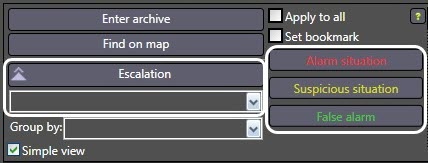
To assign a type to the event, select one or several event cells or lines using the left mouse button (hold down the Ctrl key to select several events , if this feature is enabled in the system settings) and then click one of the buttons on the event control panel. The buttons for event processing may not can be available unavailable until a comment is entered if the corresponding setting is enabled. If the helping help guides were added specified during the Operator Protocol system configuration, you the operator can click the  button button and open the helping help guide about the event processingevent processing.
| Info | ||
|---|---|---|
| ||
If the events are grouped, then selecting a line with the with the grouping name will select all events from this grouping. The presence of the event processing buttons depends on the settings of the Operator Protocoloperator protocol. |
The button names can be changed during the Operator Protocol system configuration stage.
| Info | ||
|---|---|---|
| ||
When you select the event cell or line, the camera ( linked to the corresponding object ) activation event is generated. If the Active monitor is configured in the system (see Configuring the display mode of camera windows), then video from the corresponding camera is displayed in it. If several cells are selected, then cameras are displayed one-by-one on the Active active monitor. |
After the type is assigned to the event, it is removed from the Current events tab in the Operator operator protocol window. If the event (, after being processes) is not processed, isn't removed from other Operator operator protocols when configuring the Operator operator protocol (see see Administrator's Guide, the Setting the options for handling events in the Operator protocol section), then the processed event is marked grey in other Operator operator protocol windows. But other operators can process this event once again.

| Info | ||
|---|---|---|
| ||
If all non-processed events are to be assigned with the type of If all non-processed events must be assigned with the type of the selected event, then set the Apply to all checkbox. |
In order to delay the event processing once for the time period specified when configuring the Operator operator protocol, click the Delay button. The event will not be removed from the Operator operator protocol windows, and it will not be marked grey in other Operator operator protocols.
| Info | ||
|---|---|---|
| ||
If the time of waiting for the response from the Operator (operator specified in the settings of the Operator protocol object ) (see Administrator's Guide) is exceededis exceeded, then the then the event is escalated, and if the chief interface is not isn't assigned to the Operator operator protocol, then it is removed from the Current events tab and the Non-processed type is assigned. When Axxon PSIM is restarted, the non-processed events are saved. |
Frames, archive and the
...
map
If the you want to create a bookmark for the selected events is to be created event in the archive, then set the Set the bookmark checkbox before processing the event. The comment will be used as the bookmark name. See List of bookmarks.
If the events are displayed as cells, then the frame of the moment of alarm (screenshot of the event) can be enlarged. To do this, double left-click on it. The window with the zoom-in frame appears. This window can be moved around the screen by dragging the title bar with the left mouse button; in this case, the position of the window will be remembered saved for each type of event and window of the Operator Protocolthe operator protocol window. To close this window, click the X button in the upper right corner or press Esc on the keyboard.
| Info | ||
|---|---|---|
| ||
The window with enlarged alarm frame may not appear Enlarging the frame of the alarm moment can be unavailable if the corresponding value is set for of the hide_image_preview registry key is set (see see Registry keys reference guide). |
A frame on the Current events tab is blurred until the end of the archive fragment recording to which this frame belongs.
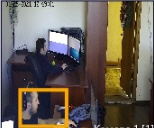
If the Tracker object the Equipment detection (PPE) object is created and configured for the camera, the objects displaying on the image is enabled and metadata source is VideoIntellect, the frames borders around detected objects may be shown can appear on the frame. The frame border color and thickness can be changed by are determined by the RectColor and RectLineWidth registry keys (see Registry keys reference guide).
Also, if captions are configured for the cameradisplay on a video image, then the event screenshot may can contain captions.
To view or export the video of the event, select the event in the list and click the Enter archive button on the control panel. The enter the archive feature is available for events from Camera objects and objects linked to them (see Administrator's Guide, the Connection of objects with cameras section).

If the ActiveX video display method was method was selected during the Operator Protocol system configuration, the window for the video viewing video viewing and exporting will open. The ActiveX The ActiveX window interface is the same as the video surveillance monitor interface.
When you open ActiveX by an alarm object, the ActiveX windows of all cameras linked with this object are opened.
Video Surveillance Monitor interface. This window can be moved around the screen by dragging the title bar with the left mouse button; in this case, the position of the window will be remembered saved for each type of event and window of the Operator Protocoloperator protocol. To close this window, click the X button in the upper right corner or press Esc on the keyboard.
If the Monitor video display method monitor was selected, then the required camera(s) will be displayed on the selected Video Surveillance Monitor in selected monitor in the archive viewing mode. In this case, the current playback position will be set to the position corresponding to the beginning of the video recording. The ArchShift The ArchShift registry key can shift the current playback position (see Registry keys reference guide).
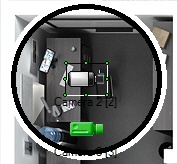
To view the object from which the event comes on the interactive Mapmap, select click the event cell in the list and then click the Find on map button on the event control panel. As a result, the required layer of the interactive Map is map is displayed. The corresponding object is highlighted with green dots and marked with concentric black-and-white circles.
Overview
Content Tools